
How Rooms Hold (or Drain) Energy
Why some spaces restore us and others quietly ask too much of us.
Have you ever walked into a room and immediately felt better? Nothing particularly remarkable happened. The furniture didn’t change. The room wasn’t perfectly clean. But somehow, you exhaled. And then there are rooms that do the opposite. The ones you walk through instead of linger in. The ones that always feel a little unfinished, a little chaotic, or simply off, even when you can’t quite explain why.
I think our homes hold energy in ways we don’t always recognize. Not in an abstract sense, but in the very real way our surroundings influence how we move, think, gather, rest, and live.
KRISTIN WINZER
A Room Can Ask Too Much of You
Sometimes a room is draining because it’s constantly asking you to solve something. Where do I put this? Why is it so dark in here? Why does everyone pile their things on this chair? Why do we never actually sit in this part of the room?
When a space doesn’t function well, we compensate for it, usually without realizing we’re even doing it. We walk around furniture, or, my favorite – we move it altogether. We search for places to set things down. We avoid turning on the overhead light because it’s too harsh. We stare at the empty wall we’ve meant to address for two years. We stuff things into closets and corners because we don’t know anywhere else they could go.
Individually, these things are small. Collectively, they’re friction, and friction takes energy.
Visual Noise Counts, Too
Not everything draining a room is functional. Sometimes there’s simply too much competing for your attention. Too many small accessories. Too many colors without anything grounding them. Furniture that feels disconnected. Open surfaces that have slowly accumulated things that don’t really belong there.
A room doesn’t have to be minimalist to feel peaceful. In fact, I love spaces that are layered, collected, and deeply personal. BUT there’s a difference between layered and cluttered.
A collected room gives your eye places to land. A cluttered room keeps asking your eye where to look next.
The Rooms That Hold Us
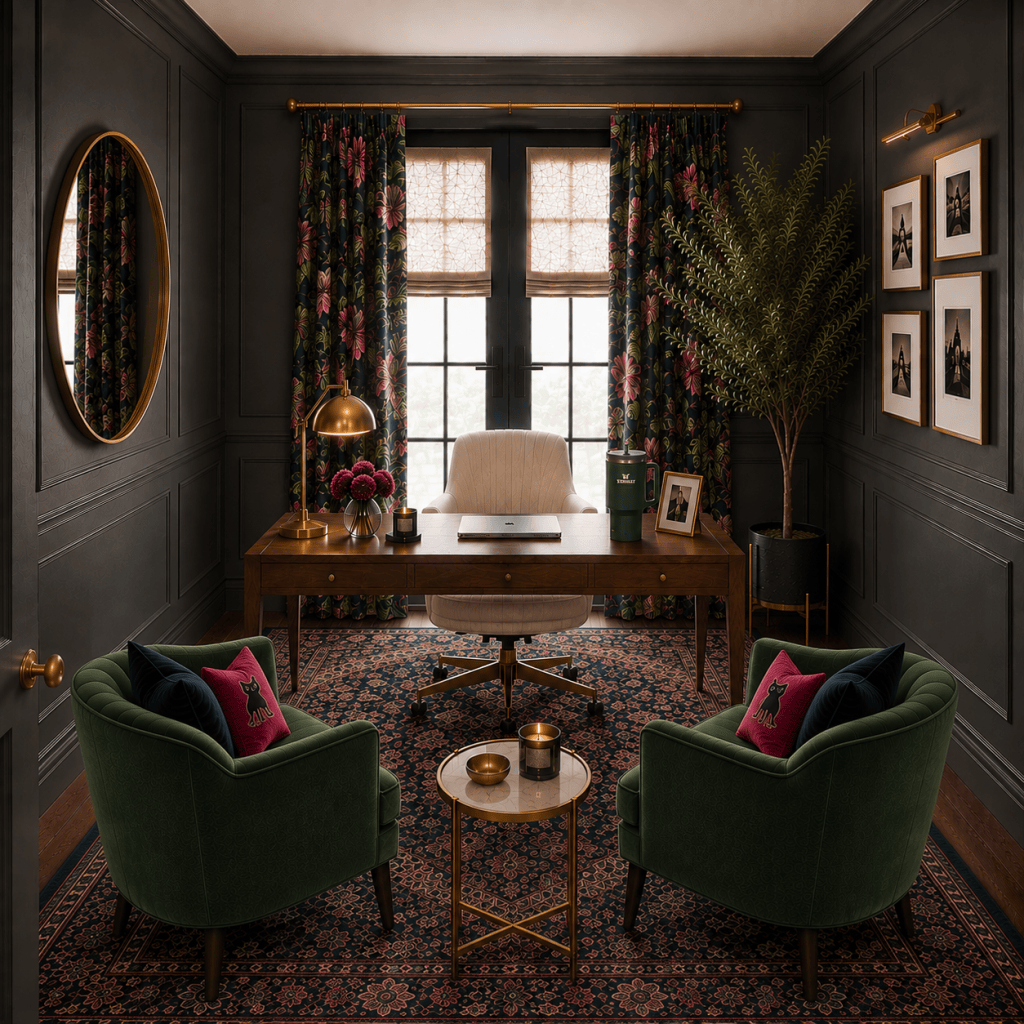
The opposite is also true. Some rooms seem to give something back. They have a comfortable place to sit and somewhere within reach to set your drink. The lighting is warm. The rug grounds the furniture instead of floating between it. The things displayed have meaning. There’s enough softness to make you want to stay awhile.
Nothing is fighting particularly hard for your attention. The room just works, and when a room works, you get to stop working around it and simply enjoy yourself. I think that’s one of the most underrated things good design can do.
Pay Attention to Where You Exhale
If you’re trying to understand what your home needs, notice how you feel in it before you start thinking about what you should buy. Where do you naturally settle? Which room do you avoid? Where does your family tend to gather (even if that isn’t where you intended for everyone to gather)? What constantly needs to be moved, adjusted, cleaned up, or worked around?
And maybe most importantly: Where do you exhale? Those answers tell us a lot because a beautiful home isn’t just one that photographs well. It’s one that supports the people living inside of it.
Your Home Should Give More Than It Takes
I don’t believe every corner of a home needs to be perfectly designed. Homes are lived in. They hold backpacks and laundry and half-finished projects and evidence of busy mornings. That’s part of what makes them ours. But underneath all of that, your home should still feel like it’s working with you.
Sometimes changing the energy of a room means rearranging the furniture. Sometimes it means removing something. Sometimes it’s warmer lighting, a larger rug, better storage, or finally choosing the piece you’ve been afraid to commit to. A lot of times, it’s simply recognizing what’s been bothering you all along.
Good design isn’t about creating a home you have to keep perfect. Instead, it’s about creating one that lets you live a little easier inside of it. It’s a home that feels grounded, welcoming, and personal. A home that holds some of the weight instead of adding to it.
Because the best rooms don’t just look good. They give something back.
— Kristin

Leave a comment